
In the evolving landscape of global procurement, the oral care industry finds itself at a crossroads between tradition, innovation, and sustainability. For B2B buyers—whether sourcing for large retail chains, pharmacies, or dental distribution networks—the decision of what inventory to stock is no longer straightforward. This is particularly true for the pediatric segment. When planning to purchase bulk kids toothbrushes, the debate often narrows down to two primary material choices: the industry-standard plastic (Polypropylene/TPE) and the eco-challenger, bamboo. While the market buzz often favors the latter for its green credentials, the scientific and practical reality for children’s oral hygiene is more nuanced. This guide provides a comprehensive, professional analysis of the pros and cons of both materials to help you make an informed decision for your next order.
The Case for Plastic: Engineering and Ergonomics
For decades, high-quality plastics have been the gold standard for children’s manual toothbrushes. When we speak of “plastic” in a high-end manufacturing context, we are referring to engineered food-grade polymers like PP (Polypropylene) and TPE (Thermoplastic Elastomer).
- The Pros of Plastic
- Ergonomic Freedom: The primary advantage of plastic injection molding is the ability to create complex, ergonomic shapes. Children, specifically toddlers, lack the fine motor skills to manipulate a thin handle. Manufacturers like Sugere (Guangdong Sugere Daily Chemicals Co., Ltd.) utilize this material flexibility to create wide, contoured handles that fit a child’s “power grip.”
- Hygiene and Hydrophobicity: From a popular science perspective, high-quality plastics are non-porous and hydrophobic (water-repelling). This is critical for bathroom hygiene. Plastic handles do not absorb water, making them resistant to mold and bacterial growth—a common issue in damp environments.
- Safety and Softness: Through over-molding technology, a rigid PP core can be covered with soft TPE or silica gel. This creates a cushioned surface that protects delicate oral mucosa if the child accidentally pokes their mouth, a common occurrence with children’s manual toothbrushes.
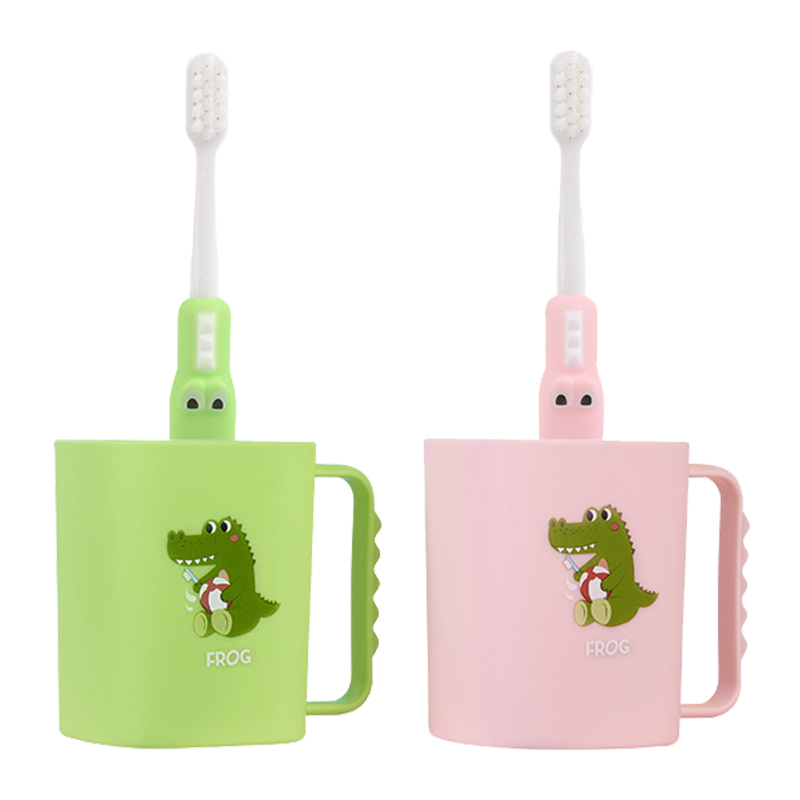
- Visual Engagement: Plastic allows for vibrant colors and character designs (like Sugere’s 083 Crocodile or Spaceman series), which are proven to increase a child’s motivation to brush.
- The Cons of Plastic
The sole significant downside is environmental. Traditional plastics are petroleum-based and can persist in landfills. However, responsible manufacturers are mitigating this by maximizing durability (reducing replacement frequency) and exploring recyclable thermoplastics.
The Case for Bamboo: Sustainability vs. Suitability
Bamboo brushes have surged in popularity due to the global “anti-plastic” movement. While they appeal to eco-conscious parents, they present specific challenges when applied to the pediatric demographic.
- The Pros of Bamboo
- Biodegradability: The handle is compostable, appealing to a specific niche of green consumers.
- Aesthetic: The natural wood look appeals to minimalist or organic branding trends.
- The Cons of Bamboo (for Kids)
- Porosity and Hygiene: Bamboo is a natural cellulose fiber. It is inherently porous and hydrophilic (water-absorbing). Without heavy chemical treatment—which defeats the “natural” purpose—bamboo handles can retain moisture. In a humid bathroom, this creates a breeding ground for mold (fungal growth) and bacteria. For bulk kids toothbrushes, this represents a liability risk regarding product safety complaints.
- Texture and Mouth Feel: Unlike the polished smoothness of injection-molded plastic, bamboo can feel rough against the inside of a cheek. In rare cases, lower-quality bamboo can splinter.
- Design Limitations: Bamboo handles are typically machined (cut) rather than molded. This limits the design to simple, flat, or round sticks. These shapes are often difficult for small hands to hold securely, compromising the efficacy of the brushing technique.
Comparative Analysis for Bulk Buyers
When sourcing bulk kids toothbrushes, the decision should be based on the “End User Experience”—in this case, the child.
- The Safety Factor
Safety is the non-negotiable metric. Sugere produces brushes using Food-Grade PP and TPE, ensuring the products are BPA-free and chemically stable. Plastic handles are smooth and chemically inert. Conversely, bamboo handles, if not preserved correctly, can develop “black spots” (mildew) within weeks of use. For a retailer, a customer returning a moldy toothbrush is a brand reputation disaster. Therefore, plastic remains the safer bet for mass-market B2B distribution where storage conditions (humidity) cannot always be controlled.
- Bristle Technology
Interestingly, the bristle material is often identical regardless of the handle. Most “bamboo” brushes still use Nylon or PBT bristles. Therefore, the “eco” claim is often only 50% true.
However, top-tier manufacturers like Sugere optimize their plastic brushes with superior bristle technology. For instance, our children’s lines feature PBT (Polybutylene Terephthalate) bristles with tapered tips. These bristles are mechanically anchored into the plastic head with high retention force (using non-copper flocking or fusing). Anchoring bristles into wood/bamboo is technically more difficult and can sometimes lead to lower retention force—a choking hazard for kids.
- Cost and Consistency
In the B2B realm, product consistency is king. Plastic injection molding guarantees that every single unit in a shipment of 100,000 children’s manual toothbrushes is identical to the micron. Bamboo, being a natural material, varies in density, grain, and color. For buyers sourcing bulk kids toothbrushes, plastic offers better economies of scale and standardized quality control (QC), ensuring stable margins and predictable shelf presence.
The Sugere Solution: Quality Over Hype
While the market offers choices, the data suggests that for children, the benefits of advanced synthetic materials outweigh the novelty of bamboo. The key is to source responsible plastic products that prioritize durability and safety. This is where Sugere excels. With over 30 years of manufacturing experience and certifications including ISO 9001, GMP, BRC, and BSCI, Sugere focuses on creating “medical-grade” oral care tools rather than disposable commodities. Our approach to the children’s manual toothbrush combines:
- Advanced Materials: Using food-grade silica gel and soft rubber to create non-slip, safe handles.
- Precision Engineering: Utilizing high-speed tufting for ≤0.01mm bristles that clean deep between teeth without damaging young enamel.
- Playful Utility: Designs like the 083 Crocodile Children Toothbrush Suit turn the brush into a standing toy, solving the hygiene issue of laying a brush on a dirty counter—something a flat bamboo brush cannot do.
Conclusion
For the general adult market, bamboo offers a viable eco-alternative. However, when purchasing bulk kids toothbrushes, the unique physiological and behavioral needs of children—small hands, sensitive gums, and the tendency to chew—make high-quality, food-grade plastic the superior professional choice. Retailers and distributors must prioritize safety and hygiene above all else. A molded, non-porous handle manufactured by a certified industry leader like Sugere ensures that the product is safe, durable, and effective. It eliminates the risks of mold and splintering associated with natural materials while providing the ergonomic support children need to learn proper hygiene. In the end, the most sustainable toothbrush is one that effectively cleans teeth and lasts for its intended lifespan without causing harm. By partnering with Sugere, you ensure that your inventory of children’s manual toothbrushes meets the highest standards of safety, science, and consumer satisfaction.