
The global oral care supply chain forms an intricate network where guaranteeing consistent product quality stands as a top priority. When businesses stock toothpaste for large-scale retail and distribution, inventory management entails far more than straightforward logistical arrangements.
It requires a deep, scientific understanding of how environmental factors affect the stability of the active formulations. When products are stored incorrectly, active ingredients can degrade, packaging can fail, and the end consumer experience can be severely compromised.
As a leading Sugere team of formulation experts, we recognize that product quality does not end when the batch leaves the assembly line. It must be actively preserved through proper warehousing and distribution practices.
Partnering with a professional toothpaste manufacturer is the first step in ensuring your products are designed for durability. In this guide, we will explore the essential guidelines for storing oral care products to maintain their chemical efficacy and overall shelf life.
The Chemistry Behind Toothpaste Degradation
Every tube of toothpaste is a carefully balanced emulsion of binders, abrasives, humectants, foaming agents, and active therapeutic compounds. Over time, these ingredients are subject to natural chemical breakdown, which is accelerated by poor environmental conditions.
For instance, standard fluoride formulations rely on active ions to promote tooth remineralization and combat cavities. If these formulations are exposed to improper storage conditions, the fluoride can slowly bind with other minerals in the paste.
This chemical reaction renders the active compounds insoluble, significantly reducing the therapeutic effectiveness of the product. The same vulnerability applies to premium botanical lines, such as those featuring Bio Essence herbal essentials.
Natural plant extracts and organic oils are highly sensitive to light and oxidation, which can cause discoloration and alter the product’s flavor profile. Understanding these delicate chemical balances is essential for any business managing wholesale toothpaste inventory.
Optimal Temperature and Humidity Controls in Storage
Maintaining strict temperature control is the single most critical factor in preserving the stability of oral care products. High temperatures cause the humectants, such as glycerin or sorbitol, to separate from the binders and abrasives.
This separation leads to a watery paste consistency, completely ruining the consumer experience upon opening. Conversely, extreme cold can cause the formulation to freeze and crystallize, permanently altering its texture even after it thaws.
Therefore, warehouses storing large quantities of wholesale toothpaste must maintain a stable temperature range between 15°C and 25°C. Humidity levels must also be closely monitored to prevent moisture from damaging the outer paper cartons.
While the internal aluminum or plastic tubes are moisture-resistant, damp warehouse environments can weaken outer packaging. Weakened packaging compromises carton structural integrity and leads to crushed boxes during pallet stacking and transport.
The Risks of Contamination and Improper Sealing
Bacterial contamination is a severe threat that can instantly destroy a brand’s reputation and lead to costly product recalls. Although toothpaste formulations contain safe preservatives to prevent microbial growth, improper sealing at any stage can invite airborne bacteria.
This risk is particularly high once bulk packaging is opened or if tubes suffer micro-punctures during chaotic transit. Proper sealing also prevents the slow evaporation of water from the formulation, which is the primary cause of product dry-out.
When managing a massive inventory of wholesale toothpaste, ensuring that all outer boxes remain securely sealed is a vital operational protocol. At Sugere, we utilize highly advanced packaging technology to create air-tight barrier tubes that protect the paste from external oxygen.
These durable barriers ensure that active ingredients remain stable and contamination-free, preserving the product’s clinical efficacy from the factory to the home.
How a Top Toothpaste Manufacturer Protects Shelf Life
To guarantee a reliable shelf life of two to three years, the preservation strategy must begin at the factory level. A professional toothpaste manufacturer must design formulations that are chemically robust enough to withstand typical supply chain stresses.
This requires rigorous stability testing, where samples are subjected to accelerated temperature and humidity trials in dedicated laboratories. Sugere brings over thirty years of deep, specialized industry experience to the global commercial manufacturing market.
Our standardized, 50,000-square-meter factory in the Guangzhou Economic and Technological Development Zone is built for uncompromising quality control. We utilize 16 intelligent production lines and top-tier machinery imported from Germany and Japan to guarantee precise sealing on every single tube.
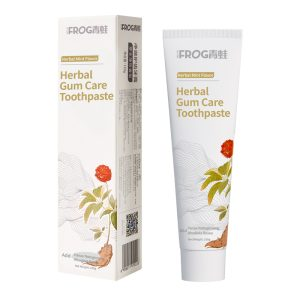
As the proud creators of the leading domestic “FROG” brand, we apply the highest safety standards to our OEM and ODM services. Our quality control team of over twenty experts monitors every production batch using forty advanced professional detection devices.
Conclusion
Ultimately, preserving the shelf life and therapeutic efficacy of oral care products requires both advanced formulation design and disciplined supply chain management. Ensuring the stability of active ingredients depends heavily on maintaining an environment that mitigates chemical breakdown and oxidation.
When managing wholesale toothpaste inventory, maintaining precise warehouse temperature controls—ideally between 15°C and 25°C—is essential to prevent emulsion separation and texture degradation. Similarly, rigorous seal integrity must be prioritized to protect against microbial contamination and formulation desiccation.
By integrating these environmental safeguards into standard warehousing protocols, distributors uphold both clinical standards and their commitment to quality. This diligence ensures that every product reaches the consumer with its full therapeutic potential intact.