
When comparing flossing bristles and standard nylon, the core question is whether either design truly supports deeper cleaning for users of adult toothbrushes. Flossing bristles are typically thinner and designed to slide between teeth surfaces more effectively, while standard nylon bristles focus on consistent plaque removal across broader contact areas. In our daily work, we review how different bristle profiles behave under real brushing conditions, especially for clients who require reliable solutions for large-scale manufacturing or private-label development. For brands developing adult soft toothbrush products, the mechanical performance of these two bristle types directly influences cleaning outcomes, comfort, and long-term adoption. Both materials can meet oral health expectations, but their cleaning depth depends on bristle diameter, flexibility, tip shape, and brushing technique.
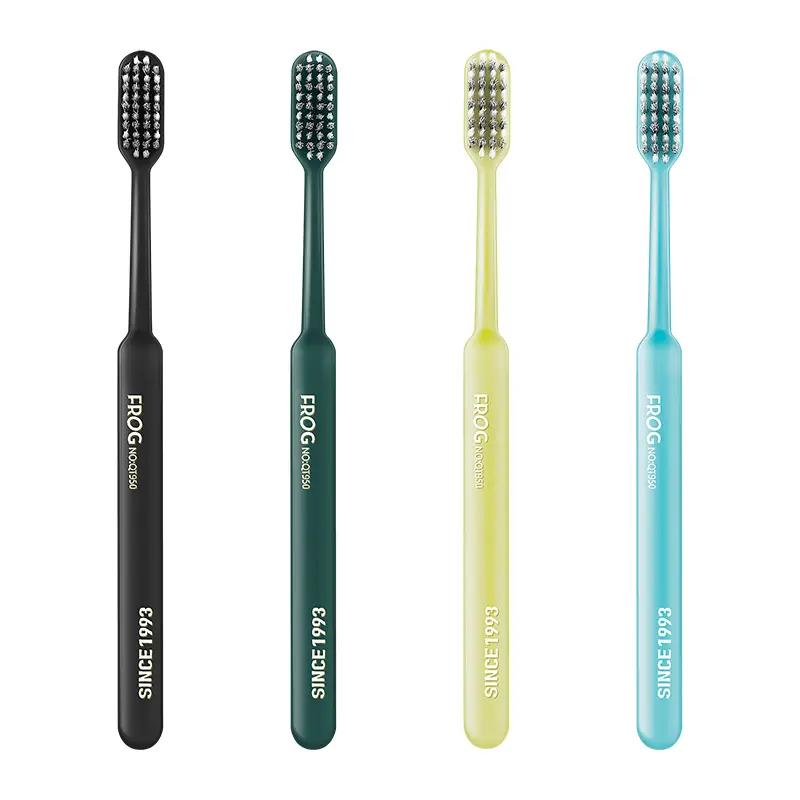
How Bristle Structure Impacts Cleaning Depth
From our perspective as a manufacturer serving B-side customers, flossing bristles tend to reach slightly deeper into narrow gaps because of their tapered design. This makes them useful in adult toothbrushes developed for consumers with dense tooth spacing or individuals looking for gentler gum contact. Standard nylon, on the other hand, maintains uniform contact with enamel surfaces and provides stable daily cleaning. When designing an adult soft toothbrush, we assess whether the target users—such as adults or pregnant customers—prefer gap penetration or uniform brushing. For example, bristles made with PBT fibers can retain softness, maintain shape, and improve cleaning consistency. This is why our internal product development often evaluates bending recovery, filament spread, and how the brush head performs under typical brushing force ranges. In practice, deeper cleaning is achieved through a combination of appropriate bristle geometry and consistent use rather than a single material choice.
Applying These Insights to Our Product Solutions
These design principles guide our manufacturing decisions when producing OBM, OEM, or ODM items for partners. One example is our Sugere 127 Nylon Bristle Plastic Toothbrush, a model built for clients seeking dependable performance in competitive markets. This model is part of our adult toothbrush portfolio and uses 0.18 mm Nylon 610 bristles (customizable) suitable for customers searching for a reliable adult toothbrush solution. With a 190 × 12.5 mm PP handle, multiple color options, and accepted customized logos, it fits home, hotel, or outdoor application settings. Our facility operates under CE, ISO, and BRC certifications, ensuring stable quality for every batch. For brands requiring scalable production through OEM workflows, this product supports OEM service and offers predictable supply timelines.
Conclusion: Choosing the Right Bristle Type for Deeper Cleaning
In summary, both flossing bristles and standard nylon contribute to effective cleaning, but their depth of reach depends on structural differences, user habits, and product design. Our experience shows that flossing bristles may reach deeper into narrow spaces, while standard nylon provides broader and more uniform surface coverage. When we develop adult toothbrushes, we evaluate real-world brushing conditions to determine which configuration matches the intended user group. For customers selecting an adult soft toothbrush model, our recommendations focus on balancing softness, cleaning efficiency, and long-term comfort. By understanding these distinctions, we can help partners choose the most suitable bristle structure for their market needs and ensure that each product offers reliable oral-care performance.